
 +86 15657752999

0102030405
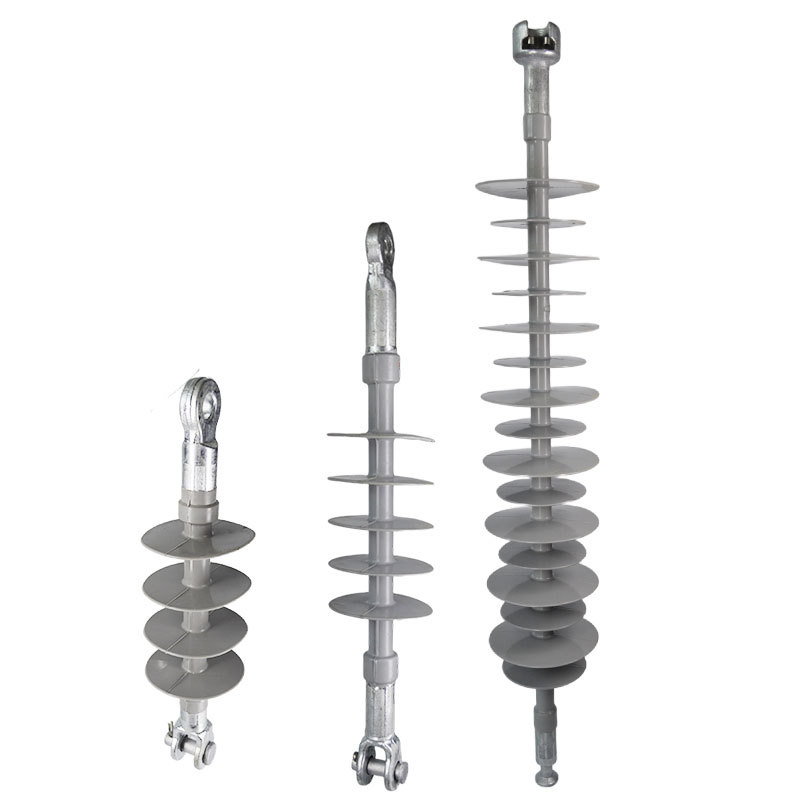

China Silicone Rubber Insulator Suppliers - Advanced Polymer Insulators for 11kV/33kV Distribution Lines from Factory
Product Advantages
Our silicone rubber insulators are engineered for maximum performance and minimal maintenance.
💧
Excellent Hydrophobicity
The silicone rubber surface repels water, preventing the formation of a continuous water film. This results in high leakage current resistance and superior performance in wet, humid, and contaminated conditions.
⚖️
Lightweight & Robust
Significantly lighter than porcelain or glass equivalents, our insulators reduce structural load, simplify handling, and cut installation costs. Despite their light weight, they offer high mechanical strength.
🛡️
Outstanding Pollution & UV Resistance
The material formulation is inherently resistant to salt, industrial pollutants, acid rain, and prolonged UV exposure, ensuring long-term integrity and performance.
🔒
Vandal-Resistance & Safety
The polymer construction is highly impact-resistant, reducing the risk of damage from vandalism or gunshots. In the rare event of failure, it does not shatter explosively like glass, enhancing personnel safety.
⚡
Live-Line Maintenance Capability
Their hydrophobic nature and design often allow for safer maintenance work on energized lines compared to contaminated ceramic insulators.
📅
Long Service Life
Designed and tested for a service life exceeding 30 years, providing excellent long-term value and reliability.
Applications: Where Our Silicone Rubber Insulators Excel
Our insulators are versatile solutions for a multitude of demanding applications:
- 1 Overhead Transmission & Distribution Lines (HV, EHV, MV)
- 2 Substations (Bushings, Support Insulators, Apparatus Insulators)
- 3 Railway Catenary Systems & Traction Power
- 4 Polluted Coastal & Industrial Areas
- 5 High-Altitude and Desert Environments
Types of Silicone Rubber Insulators
We offer a complete range to meet your specific mechanical and electrical needs:
🔗
Suspension Insulators
Used to suspend the conductor from transmission and distribution towers. Typically used in a string.
📌
Line Post Insulators
Act as both an insulator and a structural support, often used for compact line designs and substations.
🏗️
Station Post Insulators
Provide support and insulation for busbars, disconnect switches, and other equipment within substations.
📍
Pin Insulators
Commonly used for distribution lines on poles where the insulator is mounted on a pin.
🔩
Polymer Long Rod Insulators
A core design with rubber sheds and metal end-fittings, used for both suspension and tension applications.
Frequently Asked Questions (FAQ)
Q1 How does the hydrophobic property work?
Silicone rubber has a low surface energy, causing water to bead up and roll off (like water on a waxed car). This prevents the formation of a conductive water path, which is a primary cause of flashovers on contaminated ceramic insulators.
Q2 What is the expected lifespan of a silicone rubber insulator?
When manufactured to high standards, silicone rubber insulators have a proven service life of 30–40 years or more. Their longevity is dependent on the quality of the polymer compound and the design of the housing and end fittings.
Q3 Do silicone insulators require any maintenance?
They are largely maintenance-free. Unlike porcelain, they do not require regular washing to remove contamination. Visual inspections are recommended to check for physical damage or unusual weathering.
Q4 How do I choose between silicone rubber and composite/polymer?
"Composite insulator" is a broad term, with silicone rubber being the highest-performing polymer type. Other polymers like EPDM are also used but may not offer the same long-term hydrophobicity and UV resistance. Our experts can help you select the perfect material for your environment.
Q5 Are silicone rubber insulators suitable for high-pollution coastal environments?
Yes. Silicone rubber insulators are specifically well-suited for coastal and industrial environments due to their inherent resistance to salt spray, chemical pollutants, and acid rain. Their hydrophobic surface actively prevents contamination-induced flashovers even in severe pollution zones.
Q6 Can silicone rubber insulators be used at high altitudes or in extreme temperatures?
Absolutely. Silicone rubber maintains its mechanical and electrical properties across a wide temperature range and performs reliably at high altitudes where UV radiation is more intense. They are a preferred choice for challenging environmental conditions including desert heat and high-altitude installations.
Inquire Now!
If you have any needs, please feel free to contact me and I will be happy to serve you.