+86 15657752999


0102030405
What a Drop Out Fuse Does for Your Distribution Line?
2026-05-16
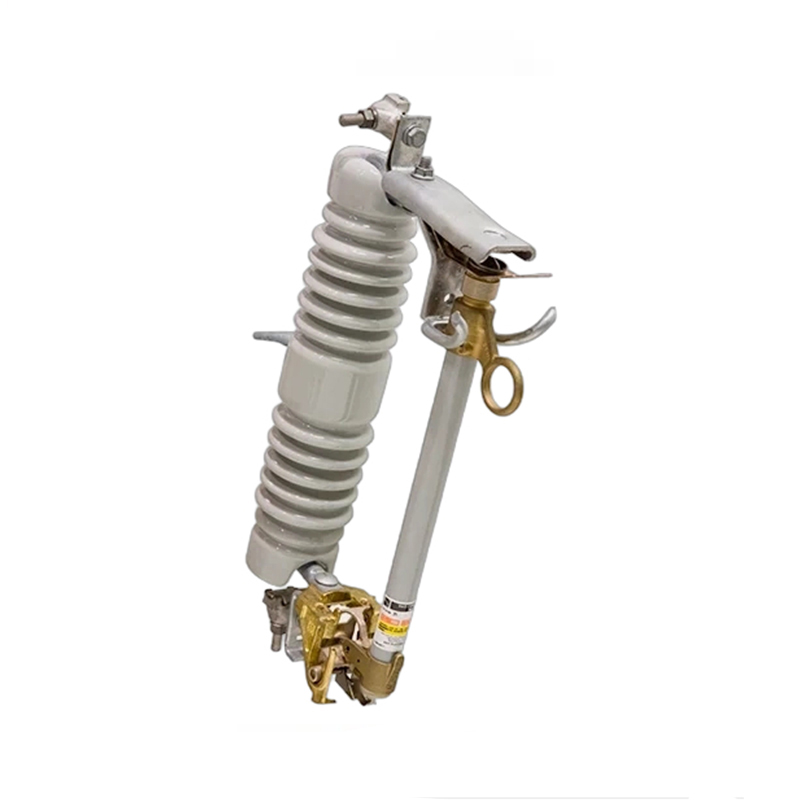
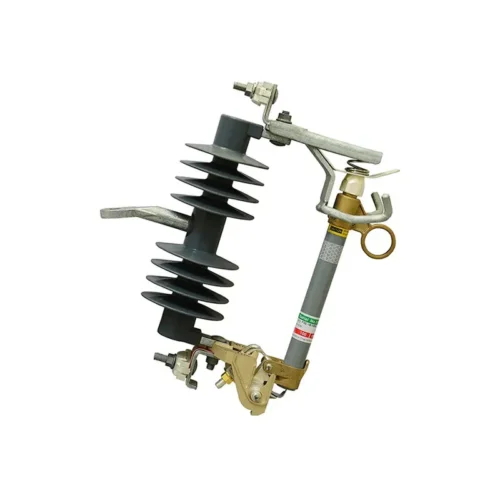
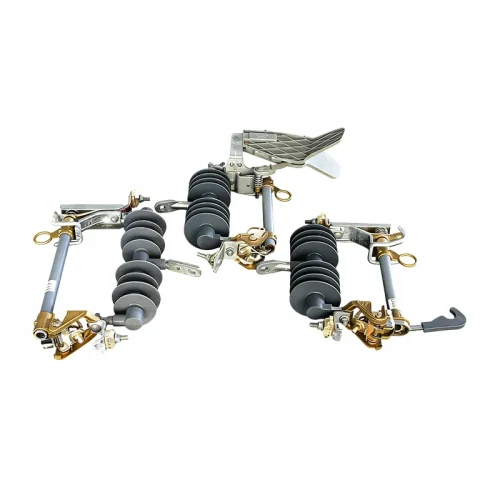
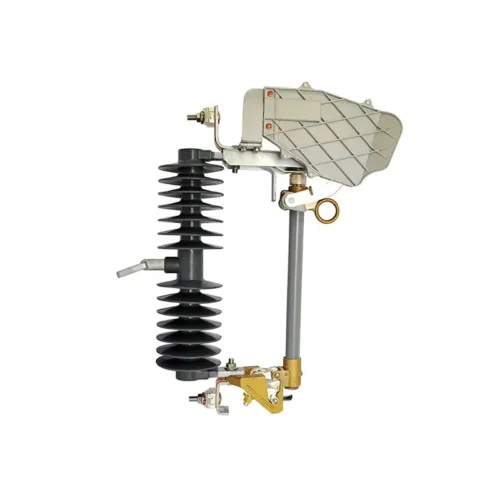
A drop out fuse is a simple overcurrent protection device that disconnects a transformer or branch line the moment a fault occurs. It sits on the pole, combines a fuse element with a visible break, and flips open after blowing so crews can spot the faulted section from the ground without any guessing. That straightforward visual cue is one reason utilities keep using these devices across rural and semi-urban distribution networks worldwide.
How the mechanism works and why it matters
Inside the fuse holder, a fuse element carries normal load current. When a short circuit or a persistent overload hits, the element melts. A spring-loaded mechanism then swings the holder away from the top contact, creating a large, open-air gap. That gap is the "drop out" action. It interrupts the arc, isolates the faulty section, and hangs there visibly open. For a lineman driving along a feeder route, a dropped holder is an immediate flag: the problem is downstream from this pole.
This visible isolation does more than speed up patrols. It also reduces the risk of someone accidentally reclosing onto a fault because the open point is obvious. In systems where coordination matters fuse-to-fuse, or fuse-to-recloser a drop out fuse helps maintain selectivity without needing communications gear.
Where you'll typically find a drop out fuse
- Transformer protection on pole-mounted distribution transformers, especially in the 11 kV to 33 kV range.
- Feeder lateral tap-offs where an overhead line splits into branches.
- Rural electrification projects where simplicity and low maintenance rank high on the wish list.
- Grid-connected solar or small generation tie-ins that need an inexpensive primary-side disconnect.
For electrical contractors and utility buyers, the pattern is familiar: when the project needs a dependable device with no external power, batteries, or communication, a drop out fuse fits perfectly. It works just as well at remote pumping stations and village feeders as it does in suburban ring-main schemes.
Key ratings to look at before ordering
Picking the right drop out fuse involves more than matching voltage. A few numbers deserve attention early.
- Rated voltage and BIL (basic insulation level):The system's maximum operating voltage and expected lightning impulse level set the baseline. Ordering a fuse rated for the wrong BIL can cause external flashovers.
- Breaking capacity:This is the maximum fault current the fuse can safely interrupt. In some distribution networks near substations, the prospective fault level can exceed 10 kA. The fuse must clear that without shattering or failing to extinguish the arc.
- Rated current of the fuse link:Transformer inrush and daily load peaks should not nuisance-blow the element. A common rule is to pick a link rating around 1.5 to 2 times the transformer's full-load current, adjusted for local coordination.
- Minimum melting current:Important for coordination studies. A fuse that melts too quickly at low overloads may trip before an upstream recloser gets through its fast curve.
These specs often get lost in catalog tables. A practical approach: note your worst-case fault current at the pole, your transformer rating, and the upstream protection curve. Then match the fuse's time-current characteristics to a TCC sheet. It may sound old-school, but it's still the most reliable way to avoid coordination surprises.
Materials and build quality checks
A drop out fuse sits outdoors for years, often in sun, salt spray, or monsoon rain. Two material families dominate:
- Porcelain housing:Proven in high-voltage service, resistant to tracking, and handles UV well. Heavy, but predictable over a long service life.
- Polymer (silicone) housing:Lighter, hydrophobic, and less likely to suffer sudden mechanical failure from impact. It's gaining ground in coastal or heavily polluted regions.
Beyond the housing, look at the contacts silver-plated copper resists oxidation better than bare brass in humid areas and make sure the hinge and trunnion move freely without excess play, the dropout spring is stainless steel or coated against rust, and the expulsion chamber uses a composite tube that sheds arc byproducts evenly to maintain consistent interruption performance over repeated fault events.
Common missteps when comparing products
Buyers often focus solely on the fuse link and overlook the complete assembly. The holder, contacts, expulsion tube, and mounting bracket all affect reliability. A well-made holder should fit snugly in the contacts loose fit leads to heating, oxidation, and eventual failure and the mounting bracket must allow the unit to open fully without hitting the cross-arm or pole band.
Another common oversight is the pick-up accessory. A loadbreak tool lets a lineman open the fuse under load safely. Without it, even opening a lightly loaded transformer becomes a risky live-line operation. If crews will operate these devices regularly, include the loadbreak accessory in the procurement from day one.
How to think about the procurement decision
Doing the homework upfront on a drop out fuse pays off in years without unplanned outages. Start with electrical parameters system voltage, fault level, and coordination interval. Then factor in environmental conditions like pollution, coastal salt, altitude, and UV exposure. After that, address practical installation questions: pole spacing, cross-arm layout, and whether your crew carries the right loadbreak tools.
With those answers, you can confidently evaluate whether porcelain or polymer housing suits your project, what current rating fits, and which breaking capacity class keeps the network safe. Matching the device to the conditions rather than a headline price usually delivers lower total ownership cost.
In an industry chasing communication-heavy smart gear, the drop out fuse stays refreshingly straightforward. No controller, no battery just a fault to blow and a lineman who spots the flag. That reliability, backed by decades of field use, is why distribution upgrade procurement lists still carry this device line after line.