 +86 15657752999

0102030405
What Is the Difference Between RTU and RMU? Clearing Up the Confusion
2026-04-30
You'll often see RTU and RMU on medium-voltage diagrams. A Ring Main Unit is a sealed, compact switchgear assembly that controls power flow through a ring network. A Remote Terminal Unit collects data and sends commands but doesn't switch medium-voltage current itself. They look similar and both sit in substations, yet their jobs are entirely different. Understanding this distinction helps avoid expensive specification mistakes.
Defining Each Device in Plain Terms
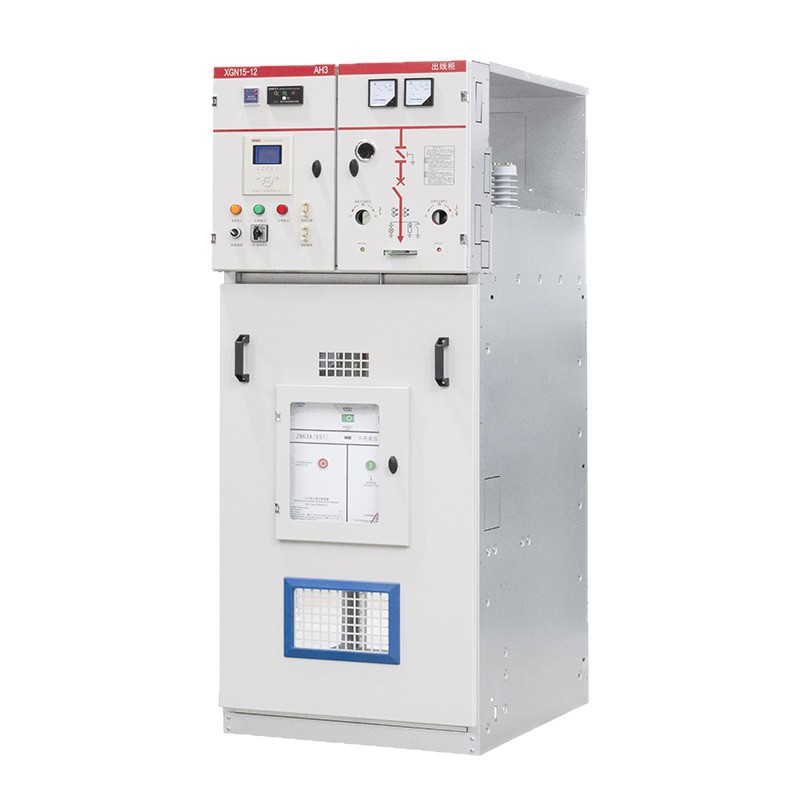
A Ring Main Unit (RMU) is essentially a self-contained switching station in a box. It typically houses load break switches, a circuit breaker or fuse combination, and a busbar system all enclosed in a metal tank, often insulated with SF6 gas or solid dielectric materials. Its primary job is to allow sections of a ring network to be isolated or reconfigured safely, keeping power flowing even when a cable fault occurs downstream. Utilities and commercial developments install RMUs at key branching points so that a fault in one segment won't black out an entire loop.
A Remote Terminal Unit (RTU) belongs to the world of monitoring and control. Think of it as a field computer. It collects status signals switch positions, voltage levels, alarm triggers from equipment like the Ring Main Unit itself, then transmits that data to a central SCADA system. If an operator needs to open or close a switch remotely, the command travels through the RTU. But the RTU does not interrupt fault current or provide insulation; it simply tells other devices what to do and reports what they've done.
Why the Distinction Matters for Buyers
Confusing RTU and RMU can lead to procurement headaches. A project requiring a Ring Main Unit to section a 12kV ring won't function with just a remote terminal unit wired into thin air. Conversely, a site that needs remote visibility of switch status without replacing the switchgear might overspend if they order an RMU when a standalone RTU paired with existing gear would suffice.
The practical overlap is that modern RMUs often have interfaces ready to connect to an RTU, making the two complementary rather than competitors. The Ring Main Unit handles the physical power switching; the RTU handles the communication layer that makes that switching visible from a control room miles away.
Key Advantages of a Ring Main Unit in Distribution Networks
When evaluating distribution equipment, several practical strengths make the Ring Main Unit a go-to choice:
- Continuity of Supply: In a closed-ring configuration, an RMU allows operators to open only the faulty cable segment. The healthy sections stay energized, meaning most end users never experience an outage.
- Compact Footprint: An RMU packs multiple switching functions into one gas-tight tank. For urban substations where space is tight, this is a deal-maker.
- Minimal Maintenance: Sealed-for-life designs eliminate the need for regular contact cleaning or lubrication. This is especially valuable in remote or underground installations where routine visits are difficult.
- Safety in Operation: Cable testing and earthing can be done through the unit's integral earth switch. The operator never needs to touch live conductors directly.
Common Scenarios Where an RMU Fits Best
You'll find a Ring Main Unit in medium-voltage distribution rings feeding residential neighborhoods, commercial parks, hospitals, and industrial estates. Wind farms and solar plants use them to connect generation feeders into the local grid. Temporary construction or mining sites sometimes deploy trailer-mounted RMUs to provide reliable switching until permanent infrastructure arrives.
A concrete example: Picture an underground cable ring serving a campus. If a cable fault occurs between two buildings, the two nearest RMUs are operated to isolate that single cable section. The campus continues receiving power from the other direction. Without an RMU, the entire ring might need to be de-energized for repair.
Where the RTU Fits In
At each of those RMU locations, a small RTU can be installed to report switch position, gas pressure, and fault passage indicators back to the network control center. This transforms a manual restoration process into a faster, partly automated one. The combination of a Ring Main Unit plus an RTU is what many utilities call a "smart RMU" setup a move toward faster fault location and reduced outage times without ripping out proven switchgear.
Making a Balanced Equipment Decision
If your role involves specifying or purchasing distribution equipment, start by clarifying the primary need. Is it reliable switching and fault isolation? Then focus on the Ring Main Unit's ratings: voltage level, busbar current, short-time withstand, number of feeders, and insulation medium. If the requirement is visibility and remote control, look at the RTU separately check its protocol support, I/O capacity, and enclosure rating. In many modern projects, you'll end up procuring both, ideally tested together to avoid integration surprises on site.
Understanding the difference isn't just technical trivia. It's the foundation of a well-designed, resilient distribution system that keeps power flowing and fault repair times short.